Friday, October 16

Stracciatella: A Sprinkling of This & That

Stracciatella: A Sprinkling of This & That

An Introduction to the Report to the Congress of the United States: A Review of the Restrictions on Persons of Italian Ancestry During World War II

by Charles Tocci My paternal grandfather didn’t want to go to war. Born and raised in Quincy, Massachusetts, Arthur was a 23-year-old high school dropout who had secured a department store job by the time Pearl Harbor was attacked. He thought he was set up for life and going off to war would only jeopardize that.  But by January, Arthur had been drafted, after which he was sent to serve as a medic in the Pacific far from the possibility of split loyalties in Europe. But as difficult as the next five years would be for Arthur, he avoided the fate of thousands of other Italian Americans who were interned, displaced, restricted, or had their property confiscated when the American government classified some as “enemy aliens.” The scope and scale of this repression was detailed in a 2001 repor...
Bella Figura: On Italian American Identity, Stracciatella: A Sprinkling of This & That

The Slap!

Three Italian Women Remember: A small collaboration. We, in the Italian American community, are used to using our hands in perhaps one too many ways: to talk, to make, to garden, to cook, to hammer. But one other way is to give a decent smack to a friend, in a loving way to say hello; or to express an exclamative, “What a great idea!”; or provide a gentle back and forth on the shoulder which means, “Get out of here, that’s ridiculous.” My father said that a smack was dusting the other person off. Getting rid of them so to speak. In this dialogue between the three of us in a 100-word writing group, each of us wrote a piece, randomly, unexpectedly about slapping and smacking. We think they belong together.  I’m going give you such a . . . Slap We were always together; our par...
The Pizza Oven
Stracciatella: A Sprinkling of This & That

The Pizza Oven

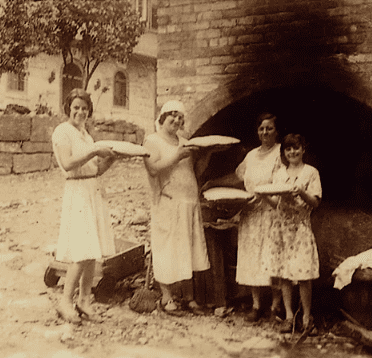
by Joanna Clapps Herman Editor's note: This is part two of the "Minestra" series by Ms. Clapps Herman, a series of narratives built around recipes from her family.  This is my mother speaking about making the weekly bread each week. Someone just told me that during the depression 20 to 30 men might come on any given day for a plate of macaroni, a glass of wine and my grandmother's bread. They'd work for their meal. That's how all of the stone walls were built on the farm. The Oven We made the dough the night before we baked our bread for the week on Saturday. My father bought hundred pound bags of flour for my mother to use. She filled the cong’, the big pan, with flour, one part whole wheat and two parts white flour and a little semolina. We put the cong’ up on a stool. T...
Stracciatella: A Sprinkling of This & That

Minestra: Monday Mid-Day Dinner Up the Farm

by Joanna Clapps Herman Excerpted from her book, When I Am Italian: Quando sono italiana. Part one of a three-part series. Photo: Annie Spratt, www.unsplash.org My cousin, Bede Becce Avcollie, the first born of my Aunt Bea and Uncle Rocco, grew up on the farm in Waterbury, Connecticut where the oldest ways of cooking went on for the longest in all of our families, because it was a pig farm and they had a huge kitchen garden. They made their own prosciutto, sausage, capicollo. They canned tomatoes, pears, lots of other things too, and made their own cheese. My grandmother was the originator of all of this cooking who, even while she reviled my Aunt Bea mercilessly, simply because Aunt Bea wasn’t from an Italian family and married her only surviving son, taught her all of her cooki...
The perennial mystery of La Befana
Stracciatella: A Sprinkling of This & That

The perennial mystery of La Befana

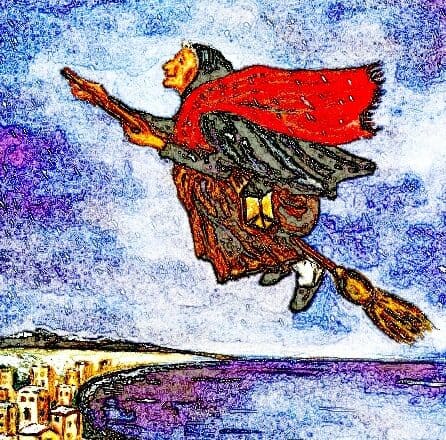
by Stefania Puxeddu Clegg Cari lettori, As we approach this time of the year again, a question arises: how do we (educators, parents) introduce Befana --- this folkloristic, kind, old female character --- in very simple words to school children, and how do we justify her presence shortly after Santa’s visit? Source: Wikimedia The character of Befana most likely originated from Northeastern Europe (Belarus, perhaps), possibly evolved, and, like Mary Poppins, followed the southward winds and landed in Italy at some point. How and why do we have her deliver even more gifts on the 6th of January (as if whatever was received on the 25th was not enough) was never really clear to me. And why on earth does she have to uncomfortably ride a broom rather than a camel (like the Wise K...
Sausage for Lunch
Essays, Stracciatella: A Sprinkling of This & That

Sausage for Lunch

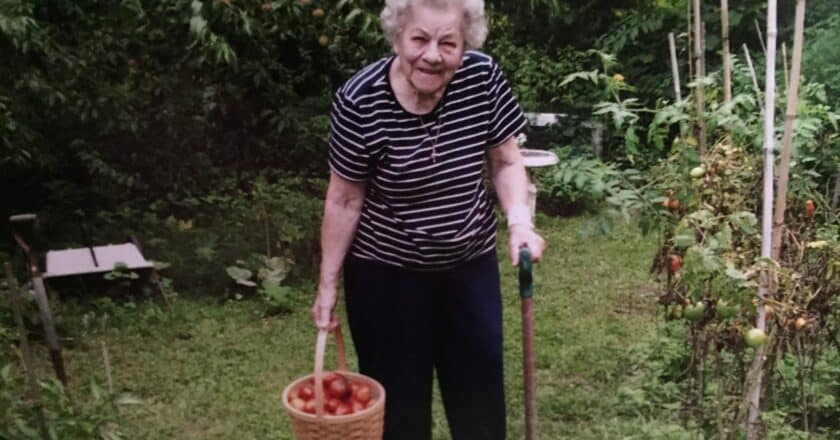
By Joanna Clapps Herman The author's aunt with her tomato harvest. We always had sausage for lunch on Saturdays, because we were always making the sauce for Sunday macaroni. Every Saturday started the same way. First my mother, my sister and I cleaned the house, then we started the sauce. Two pounds of sausage, one hot, one sweet, two pounds of ground meat for the meatballs. Only sometimes braciola. My mother’s Tolvese grandmother put in chicken too. But we never did. We made it Aviglanese style because that’s what the wife does. She learns the sauce of her husband’s people so he’ll always have the sauce from his childhood. My mother studied the Aviglanese recipes from my father’s grandmother, Mammanonna. It was a point of pride that women were great cooks and that they learned their...
Stracciatella: A Sprinkling of This & That

“This Fundamentally Changed Me”: An Interview with a Sedition Hunter

By Charles Tocci They are the secretive group of anonymous individuals working collectively to parse publicly available videos, frame by frame, just to get a glimpse of a face in the crowd at the January 6th Capitol Invasion. They are the watchers on the newsfeed scanning for every clue about the identities of right-wing extremists. They are the sedition hunters who collect as much evidence and information about Capitol invaders as possible and then pass their dossiers to law enforcement for prosecution. I became hooked on the puzzle and wanted to understand how they do this work, why they do it and what it might tell us about the appropriation of Columbus statues by right-wing extremist movements. IH (a pseudonym) has been a hunter since January 7th, spending from 40 to 100 hour...
Learning to love swimming in Lake Michigan
Essays, Stracciatella: A Sprinkling of This & That

Learning to love swimming in Lake Michigan

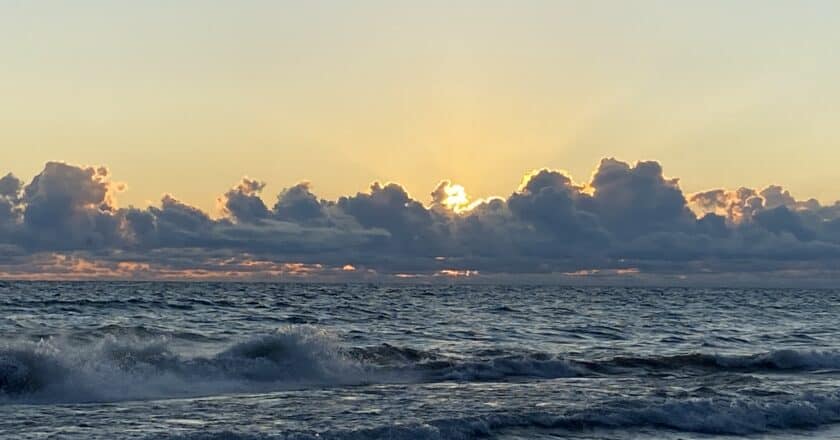
By Teresa Albano Lake Michigan The ferocity of the waves cannot be captured in a single photo of a rising sun, although my swim buddy, Aliza, tries. The waves’ height are, according to Lake Michigan Buoy #45174, 4.3 ft., coming every 6 secs. They hit the shallow sandy bottom and break with energy that easily knocks you down. It’s impossible to confront high-breaking waves by standing upright, as if you were a courageous Black Lives Matter activist, standing your ground for decency, democracy and the First Amendment. You have to submerge or swim through them, which may feel counterintuitive. But when facing a force like water, being relaxed and flexible beats being stiff and rigid. Aliza and I, teammates on an adult swim team, take to Lake Michigan during the summer of 2020 for ...
Italy’s Oil Colony: Basilicata
Stracciatella: A Sprinkling of This & That

Italy’s Oil Colony: Basilicata

An interview with Giorgio Santoriello, author of Colonia Basilicata A regional map of Italy with Basilicata in Red. The region of Basilicata is historically one of the poorest and most rural regions of Italy. With a total population of only half-a-million people, Basilicata is known to outsiders for its vast landscapes, its picturesque villages, and its many heritage sites: The Sassi of Matera, the abandoned city of Craco, the beauty of Castelmezzano, and the Roman city of Grumentum. But behind the postcard images is the toxic reality of the oil industry in the region, which has an environmental track record that borders on the criminal. The areas most impacted by the oil extraction have seen sharp rises in the rates of cancers, yet Eni, the petroleum giant, exerts undue influenc...
Living Remnants: Arpitan in Southern Italy
Stracciatella: A Sprinkling of This & That

Living Remnants: Arpitan in Southern Italy

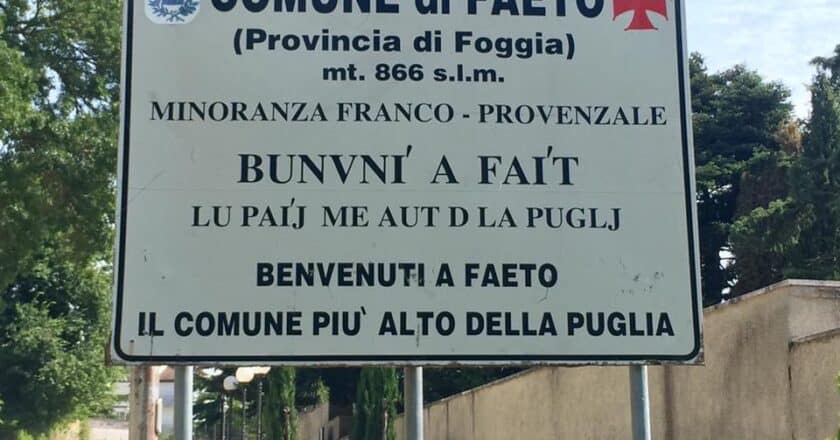
A view of Faeto's center (Photo: Stephen J. Cerulli) by Stephen J. Cerulli August 1, 2020 (This is a modified and updated version on an article first published in: 1 University Place: Volume 1 / Issue 2 / Spring 2015) Nestled in the rolling hills of the Daunian Mountains, in northern Apulia, lies the village of Faeto. The Faítare, the village’s residents, affectionately call it “Faít”. Though this may seem like a cute moniker, or a southern Italian dialect place-name, neither is the case. In fact, the name is not Italian at all, it is a dialect of Arpitan, a romance language spoken in the Swiss, Italian, and French Alps (The neighboring village of Celle San Vito also speaks a dialect of Arpitan). So what exactly is Arpitan?[1] And why is an Alpine language spoken in southern Italy...